


10 Reasons People Are Throwing Out Their “American Pillow” For This Japanese-Style Cervical Pillow
There’s a sleeping mistake almost everyone makes tonight: eight hours on a flat bag of fluff. The stiff neck you carry to the shower, the arm that’s dead at 3am, the snoring your partner keeps logging, the headache climbing behind one eye by lunch — they all trace back to the same object. Here’s what the flat pillow has been doing to you all along, and what the contoured Japanese-style shape everyone’s switching to does differently.
By the Selorna Sleep Desk · Reviewed by Dr. Alan Mercer, orthopedic specialist (ret.) · Last updated August 2026
Your Flat Pillow Gives Your Neck Two Options — Both Bad
Watch what happens on your side: either there’s a gap between your neck and the mattress and every muscle spends the night loading against it — or the pillow’s too tall and your neck folds the other way, and you sleep bent. That’s the whole menu. Eight hours a night, every night, on a shape that was never designed for a neck — and then we call the result “slept wrong.” You didn’t sleep wrong. You slept on the wrong object.

The 3am Dead Arm Isn’t Random
You know the move: not enough support, so you slide your arm under the pillow for height. It works for an hour — then you’re awake at 3am shaking a hand that isn’t yours anymore. That’s circulation pinched under your own bodyweight, every single night, because the pillow made your arm do its job. The contoured shape fixes the cause: the raised wings hold your head at shoulder height so your arm doesn’t have to — and the curved edges give the under-pillow arm a resting place that doesn’t cut it off.

On Your Back It’s Worse: The Double-Chin Position
A puffy pillow shoves your head forward and your chin down into your chest. Your mouth falls open, you breathe through it, you snore — and years of mouth-open nights quietly work on your jawline and facial posture. It’s the least flattering position a face can hold, and most people hold it eight hours a day. The cervical shape keeps your chin up and your head neutral, so your nose does the breathing, the snoring loses its position, and your face stays out of the fold.

Built For Side Sleepers, Finally
Most sleep products quietly punish side sleepers — too flat, so the head hangs; or a wedge of foam that fights your shoulder all night.
The raised wings hold your head level with your spine on your side, with room for the shoulder to sit where it wants to.
You shouldn't have to retrain how you've slept since childhood. The setup was the problem — not you.

The Headache That Starts In Your Neck
That climb — base of the skull, up the back of the head, settling behind one eye — very often starts with the neck muscles guarding all night at a bad angle.
When the cervical curve is carried through the night instead of kinked, the muscles finally get to stand down.
People chase that headache with pills for years without ever suspecting the thing under their head at 3am.

It Stays Cool — So You Stop The 2am Flip
Here's the part nobody told you: the thing that moves you off the right spot is heat. Foam hits body temperature, you surface at 1-something, flip to the cool side, and land somewhere the shape was never designed for.
The breathable knit cover and open structure give heat an exit route all night, instead of sealing it under your head.
Cooler head, fewer forced moves, more of the night spent in the spot that's actually working.


#1 BESTSELLER OF 2026
The original Japanese-style cervical pillow
Cooling Ergonomic Memory Foam Neck Pillow
Cooling Ergonomic Memory Foam Neck Pillow
- Two support heights, live all night — your roll picks the right one
- Arm-rest curves at the edges — no more 3am dead arm
- Keeps your chin up — nose breathing, not snoring
- Gel-cooled, high-density foam — heat gets an exit, not a promise
HURRY! Deal ends at 11:59 PM
Get it between - and -.
NO RISK 90-Night Money Back Guarantee
We get it — you’ve bought pillows before that ended up on the pile. So here’s our promise: sleep on your Selorna neck pillow for 90 nights, and if your mornings haven’t changed, we’ll refund every penny — free return shipping, prepaid label, no restocking fee, no handling fee, and no “destroy it and send photos.” The trial is 90 nights because 30 isn’t long enough to catch what actually goes wrong with pillows. No hoops. No hassle.

Cooling Ergonomic Memory Foam Neck Pillow


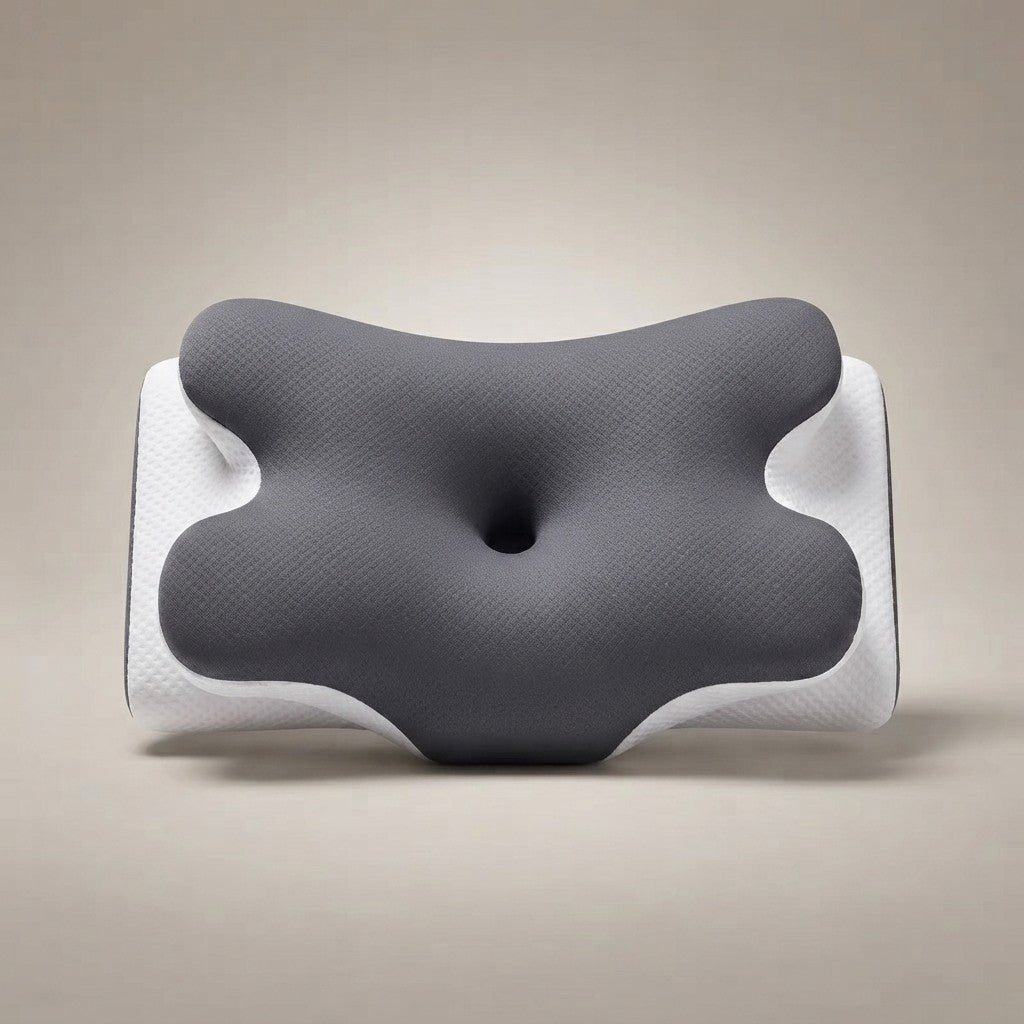
It Keeps Your Chin Up — So Your Nose Does The Breathing
That raised ridge under your neck isn’t styling. It keeps the curve of your neck filled while the centre cradle lets the back of your head settle low — chin up, airway open, lips together. Partners notice this one first: quieter nights, no more mouth-open snoring position. You’ll notice it in the mirror over time — your face spends a third of its life asleep, and it may as well spend it in a position that isn’t working against it.

Every Position Has A Place — Including Your Arm
Back, side, restless rotator — the surface is mapped in zones: cradle in the centre, wings at the sides, a neck ridge across the front, even arm-rest space at the edges for the under-pillow arm crowd.
However you land, some part of this pillow was drawn for exactly that landing.
It's one pillow doing the job of the three-pillow nest you've been engineering every night.

The Pillow Graveyard Ends Here — Just Don’t Buy The Fake One
Add up the pile in your closet: the $40 memory foam, the $89 shredded one you tuned like a science project, the $150 “cooling” one that cooled for five minutes. They all shared one assumption — one height, one position, one motionless sleeper. This shape is the first one built for how you actually sleep. One warning now that it’s gone viral: the knockoffs are cheap shredded foam stuffed into a memory-foam shell — same silhouette, none of the support, flat in weeks. Selorna’s dense-core original is sold on selorna.com only.

Try It For 90 Nights — Including The Adjustment Weeks
One physical-therapy copay costs more than this pillow. So does the pile in your closet.
Cervical shapes take some nights to feel normal — everyone who's tried one knows the first-week weirdness. That's exactly why you get 90 nights, not 30.
If your mornings haven't changed, send it back: free both ways, prepaid label, no restocking fee, full refund. Worst case, you're out nothing. Best case, you stop waking up injured.

What Customers Are Saying
Three years of stiff mornings, gone in two weeks
I'd wake up unable to turn my head to the left and just accepted it as being in my forties. Two weeks on this and I turned around in the driver's seat without thinking. I only noticed because it didn't hurt.
The dead arm and the snoring — both gone
I’ve slept with my arm under my pillow my whole life and paid for it every night at 3am. Now the arm goes in the curve under the wing and stays asleep exactly as long as I do. The bonus my wife didn’t expect: I stopped snoring — apparently my chin isn’t buried in my chest anymore.
The base-of-skull headaches faded
I'm a side sleeper who was getting headaches that started at my neck and parked behind my right eye by 10am. Three weeks in, they're mostly just... not there. My massage therapist asked what changed. The pillow changed.
Your Questions, Answered
Both, at once — that's the whole design. The low centre cradle carries back sleeping; the raised wings carry side sleeping; you switch between them by just rolling, the way you already do.
The low centre profile is far friendlier to stomach sleeping than a standard tall pillow, but a dedicated stomach sleeper wants the flattest setup possible — honest answer: this pillow's best work is for back and side sleepers, which is where most stomach sleepers end up part of the night anyway.
Honest version: no pillow refrigerates your head. What this does is give heat an exit — a breathable knit cover over an open structure, instead of a sealed film that traps warmth in five minutes. Cooler surface, fewer of the 2am cool-side flips that pull you off the support.
Cervical shapes feel different for the first nights — usually somewhere between night 3 and week 2 it flips from “weird” to “mine.” That adjustment window is exactly why the trial is 90 nights instead of 30.
The core is a dense, shape-holding memory foam — it's built to return to form night after night rather than pancake. If it ever lets you down inside the trial, it goes back on us.
It comes with its own zip-off cover that machine-washes cold and air-dries — and it fits a standard pillowcase too. Keep the foam core itself dry; it never touches your skin.
It keeps your chin up off your chest — the collapsed position that forces mouth breathing and the snoring that comes with it. Head neutral, airway in a friendlier line, lips together: many partners report quieter nights inside the first week. It’s a posture effect, not a medical device claim.
Like most fresh foam products it can have a light newness smell — give it 24–48 hours airing out and it's gone.
Free on every order. 1–2 business days processing, 5–12 business days delivery, tracking as soon as it ships.
You get 90 nights from delivery — enough to judge it through the adjustment weeks and real life. Returns are free both ways with a prepaid label, no restocking fee, full refund of every penny. Email support@selorna.com and a real person sorts it.